Cardiovasculaire nauwkeurigheid
Illustraties die zijn ontwikkeld op basis van gevalideerde anatomische referenties en beeldvormingsgegevens van het hart- en vaatstelsel.
Duidelijkheid bij complexe hartcommunicatie
Gestructureerde afbeeldingen die zijn ontworpen om de anatomie van het hart, ingrepen en fysiologische processen uit te leggen.
Visualisatie die klaar is voor publicatie
Medische afbeeldingen die zijn gemaakt voor onderzoek, onderwijs, klinische communicatie en wetenschappelijke publicaties.
Medische illustratie op het gebied van cardiologie
De cardiologie is een van de meest complexe vakgebieden binnen de geneeskunde. Het hart is een dynamisch, driedimensionaal orgaan dat wordt gekenmerkt door voortdurende beweging, elektrische activiteit en ingewikkelde vaatstelsels.
Bij het communiceren over hart- en vaataandoeningen, ingrepen of innovaties is visuele duidelijkheid geen luxe, maar een absolute noodzaak.
Medische illustraties op het gebied van cardiologie zetten de complexe anatomie, pathologie en ingrepen van het hart om in nauwkeurige, wetenschappelijk onderbouwde afbeeldingen die geschikt zijn voor klinisch gebruik, onderwijs en publicaties.
Bij Karin Spijker ligt de nadruk op het combineren van wetenschappelijke nauwkeurigheid met visuele duidelijkheid. Het doel is niet vereenvoudiging, maar een juiste interpretatie en effectieve overbrenging van complexe medische informatie.
Gerelateerde diensten:
→ medische illustraties
→ chirurgische illustraties
→ medisch-juridische illustraties
"Ik werk al jaren samen met Karin Spijker aan verschillende visuele projecten. De grootste gemene deler in deze projecten is een kwalitatief, professioneel beeld dat op tijd geleverd wordt. Karin is op beide vlakken helemaal thuis, of het nu gaat om een illustratie of high-end beeldbewerking op fotomateriaal."
 Pauline Speelman, Signorita
"Karin Spijker heeft meerdere keren naar volle tevredenheid opdrachten voor mij uitgevoerd, zoals logo's en twee 3D animaties. Karin kan de informatie uit een briefing vertalen naar het gewenste eindproduct en kan prettig meedenken. Daarbij werkt ze nauwkeurig, houdt zich aan de gestelde planning en komt haar afspraken na. Karin is ook een charmant persoon om mee samen te werken."
 Natasja Kardos, Seahorse Solutions
"Voor mijn klanten heb ik Karin Spijker vaker gevraagd voor maatwerkopdrachten, met name voor meer specialistische beeldbewerking. Karin kan software als Adobe Photoshop en Illustrator tevoorschijn toveren. Ze is heel secuur en communiceert ook over de voortgang. Ik kan Karin, haar werk en haar prettige samenwerking van harte aanbevelen."
 Marian de Jong, Piri Piri Marketing en Communicatie
Complexe hartanatomie begrijpelijk maken
Medische illustraties op het gebied van de cardiologie zijn veel meer dan alleen een esthetische weergave van het hart. Het is een gestructureerd communicatiemiddel dat is ontworpen om uiterst complexe anatomische en fysiologische informatie te verduidelijken. Het cardiovasculaire systeem is dynamisch, bestaat uit verschillende lagen en is voortdurend in beweging, waarbij ingewikkelde verbanden bestaan tussen kamers, kleppen, bloedvaten, de bloedstroom, elektrische signalen en omliggende structuren.
Ruwe beeld- en diagnostische gegevens bevatten vaak meer informatie dan snel kan worden geïnterpreteerd of effectief aan een breder publiek kan worden overgebracht. Medische illustraties zorgen voor hiërarchie, structuur en selectieve nadruk. In plaats van elk zichtbaar detail weer te geven, leggen ze de nadruk op de anatomische en functionele verbanden die voor het beoogde doel het belangrijkst zijn.
Dit is vooral nuttig bij het uitleggen van:
- coronaire hartziekte en verstoppingen
- aangeboren hartafwijkingen
- interventionele cardiologische ingrepen
- elektrofysiologie en hartritmestoornissen
- afwijkingen aan hartkleppen en chirurgische hersteltechnieken
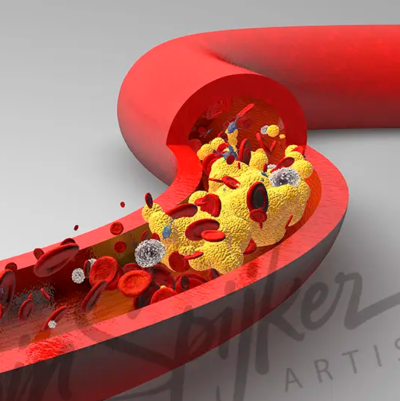
- vasculaire hulpmiddelen zoals stents, transplantaten en pacemakers
Een zorgvuldig ontworpen cardiologische illustratie kan in enkele seconden duidelijk maken wat anders wellicht een uitgebreide mondelinge uitleg of interpretatie van meerdere beeldvormende onderzoeken zou vereisen. Dit zorgt voor meer duidelijkheid in onderzoek, onderwijs, communicatie met patiënten en klinische samenwerking.
Gerelateerd:
→ anatomische illustratie
→ medische animatie
→ biomedische animatie
→ wetenschappelijke animatie en visualisatie
De specifieke uitdagingen bij beeldvorming in de cardiologie
Voor visualisatie in de cardiologie is meer nodig dan alleen algemene anatomische kennis. Het cardiovasculaire systeem combineert een complexe ruimtelijke anatomie met voortdurende beweging, drukveranderingen, vertakkingen van bloedvaten en zeer gespecialiseerde procedurele werkwijzen. Kleine onnauwkeurigheden in de anatomie, de richting van de bloedstroom of de positionering van apparatuur kunnen leiden tot grote misverstanden in zowel educatieve als klinische contexten.
In tegenstelling tot statische anatomische onderwerpen gaat het bij cardiologie vaak om processen die zich in de loop van de tijd ontvouwen. Bloedcirculatie, de werking van hartkleppen, katheternavigatie en elektrische geleidingspatronen vereisen allemaal een zorgvuldige visuele interpretatie om nauwkeurig te kunnen worden weergegeven. Dit maakt illustraties op het gebied van cardiologie tot een bijzonder veeleisende taak binnen de medische visualisatie.
Vaak gaat het niet alleen om anatomische nauwkeurigheid, maar ook om de afweging welke informatie kan worden vereenvoudigd en welke details zichtbaar moeten blijven. Bij effectieve visualisatie in de cardiologie wordt een evenwicht gevonden tussen wetenschappelijke precisie en visuele duidelijkheid, waardoor specialisten, studenten en een niet-medisch publiek complexe verbanden efficiënter kunnen begrijpen.
Dit niveau van communicatie is met name belangrijk bij:
- interventionele cardiologie
- cardiovasculaire chirurgie
- elektrofysiologie
- wetenschappelijke publicaties
- medisch onderwijs en e-learning
- communicatie met de patiënt en geïnformeerde toestemming
Een gespecialiseerde medische illustratie op het gebied van cardiologie geeft niet alleen de anatomie weer. Ze vertaalt complexe cardiovasculaire informatie naar een gestructureerd visueel begrip.
Werkstroom: van medische gegevens tot het uiteindelijke beeldmateriaal
Elk project verloopt volgens een gestructureerd en transparant proces.
Het begint met een gericht intakegesprek, waarin het doel, de doelgroep en de mate van gedetailleerdheid worden vastgesteld. Medisch referentiemateriaal, zoals beeldvormingsgegevens en rapporten, wordt doorgenomen.
Conceptschetsen worden in samenwerking met de klant ontwikkeld en verfijnd. Zo wordt ervoor gezorgd dat de visuele weergave en de medische inhoud op elkaar zijn afgestemd.
De uiteindelijke illustratie wordt geleverd in het gewenste formaat en de gewenste resolutie, klaar voor publicatie, presentatie of klinisch gebruik.
Een transparante workflow die is ontworpen met het oog op nauwkeurigheid, duidelijkheid en efficiënte samenwerking.

Over Karin Spijker
Ik ben Karin Spijker, wetenschappelijk en medisch illustrator met een achtergrond in tekenen, schilderen en textielontwerp. Met een masterdiploma in wetenschappelijke illustratie en aanvullende vaardigheden op het gebied van 3D-productie combineer ik nauwkeurigheid, artisticiteit en het vertellen van verhalen. Mijn werk helpt teams in de gezondheidszorg en de uitgeverswereld om complexe ideeën duidelijk en betrouwbaar over te brengen.
Mijn werk richt zich op het vertalen van complexe cardiovasculaire anatomie en medische informatie naar gestructureerde visuele communicatie voor onderzoek, onderwijs en klinisch gebruik.
Naast projecten in opdracht maak ik ook onafhankelijke kunstwerken die geïnspireerd zijn door de natuur, anatomie en landschappen. Mijn missie is om wetenschap en natuur toegankelijk, inspirerend en visueel aantrekkelijk te maken.

Wetenschappelijke impact van visuele communicatie
- een duidelijkere interpretatie van complexe gegevens
- betere communicatie tussen specialisten
- effectiever onderwijs
- een beter begrip bij de patiënt
In klinische werkprocessen dragen duidelijke visuele hulpmiddelen ook bij aan de efficiëntie. Door voorafgaand aan de ingreep visueel af te stemmen, wordt gewaarborgd dat alle teamleden vóór de ingreep hetzelfde mentale model hanteren.
Illustraties op maat versus stockafbeeldingen en AI
Als het gaat om beeldmateriaal op het gebied van de cardiologie, zijn er verschillende mogelijkheden. De verschillen zijn echter aanzienlijk.
Stockplatforms bieden snelheid en gemak, maar gaan uit van algemene anatomische kenmerken. Ze zijn zelden geschikt voor publicaties of casusgerichte communicatie.
Generatieve AI kan visueel indrukwekkende beelden produceren, maar mist een echt begrip van de anatomie. Dit leidt vaak tot onnauwkeurigheden, waardoor de resultaten onbetrouwbaar zijn voor medisch gebruik.
|
Functie
|
Medische illustraties op maat (Karin Spijker)
|
Stockfoto’s / AI-tools
|
|---|---|---|
|
Wetenschappelijke nauwkeurigheid
|
Gebaseerd op gevalideerde anatomische en wetenschappelijke bronnen |
Vaak algemeen, verouderd of feitelijk onjuist
|
| Didactische focus | Speciaal ontworpen om uw boodschap duidelijk over te brengen | Algemene afbeeldingen, die vaak geen duidelijk educatief doel hebben |
| Flexibiliteit | Volledig aanpasbaar gedurende het hele ontwerpproces | Geen of zeer beperkte aanpassingsmogelijkheden |
| Visuele consistentie | Een consistente visuele stijl in alle materialen | Een mix van stijlen uit verschillende bronnen |




Inzicht in de prijsstelling van medische illustraties op het gebied van cardiologie
Elk project is maatwerk en hangt af van de omvang, de complexiteit en het beoogde gebruik. Als u een duidelijk overzicht wilt van hoe de prijsstelling is opgebouwd, inclusief gangbare prijsbereiken en licentievoorwaarden, kunt u de prijspagina raadplegen.
Waarom professionals voor Karin Spijker kiezen
- de anatomische verhoudingen kloppen
- de medische terminologie wordt correct toegepast
- de afbeeldingen voldoen aan de internationale publicatienormen
- de communicatie blijft duidelijk en betrouwbaar
Veelgestelde vragen
Hier vindt u antwoorden op veelgestelde vragen over het illustratieproces, tijdschema’s, prijzen, licenties, bestandslevering en samenwerking.
Klaar om uw cardiologieproject te bespreken?
Als u aan een project op het gebied van cardiologie werkt en behoefte hebt aan nauwkeurige, hoogwaardige visuele communicatie, kunt u een adviesgesprek aanvragen of uw vraag indienen.
Of het nu gaat om een wetenschappelijke publicatie, een chirurgische ingreep, een opleidingsmodule of de ontwikkeling van een medisch hulpmiddel, het doel blijft hetzelfde:
Complexe hartinformatie omzetten in duidelijke visuele communicatie
Werk rechtstreeks samen met een gespecialiseerde medische illustrator
voor nauwkeurige, publicatieklare afbeeldingen die zijn afgestemd op uw vakgebied.
Klaar om samen te werken aan een medisch illustratieproject?
Duidelijk, nauwkeurig en afgestemd op uw medische inhoud