Evidence-based medical accuracy
Developed from verified medical references and aligned with current anatomical and clinical standards. Consistent terminology and visual hierarchy across complete publications.
Clarity for clinical and scientific communication
Illustrations remove unnecessary visual noise and focus on essential structures and processes, improving comprehension for students, researchers, and patients.
A structured, collaborative workflow
From briefing to final delivery: sketch approval rounds, precise refinement, and publication-ready files, delivered on schedule.
Professional medical illustrator
In healthcare and biomedical communication, clarity is essential. Whether explaining a diagnosis, documenting a surgical procedure, or supporting medical education, visual accuracy plays a critical role in how information is understood and retained.
As a medical illustrator, I translate complex medical and scientific information into clear, precise visual material. High-quality medical illustrations support clinical practice, education, research, and patient communication by presenting anatomy, pathology, and medical processes in ways that text or photography alone cannot.
As a professional medical illustrator, I work at the intersection of medical science, clinical practice, and visual communication, collaborating with healthcare professionals, publishers, and institutions to ensure accuracy, clarity, and long-term usability.
If you are looking to hire a medical illustrator, you can learn more about the process here.
“I have worked with Karin Spijker for many years on various visual projects. The greatest common denominator in these projects is a qualitative, professional image delivered on time. Karin is entirely at home in both fields, whether an illustration or high-end image editing on photo material.”
 Pauline Speelman, Signorita
“Karin Spijker has performed assignments for me several times to my complete satisfaction, such as logos and two 3D animations. Karin can translate the information from a briefing into the desired end product and can think along with you pleasantly. In doing so, she works accurately, follows the set timetable, and honors her appointments. Karin is also a charming person to work with.”
 Natasja Kardos, Seahorse Solutions
“For my clients, I have asked Karin Spijker more often for customized assignments, especially for more specialized image editing. Karin can conjure up software like Adobe Photoshop and Illustrator. She is very meticulous and also communicates about progress. I highly recommend Karin, her work, and her pleasant cooperation.”
 Marian de Jong, Piri Piri Marketing en Communicatie
Medical illustration services
I provide specialized medical illustration services for publishers, healthcare organizations, and research institutions. Explore the areas below to learn more about specific illustration applications.
What a medical illustrator contributes to your project
A medical illustrator specializes in visualizing medical and anatomical information for professional use. This includes illustrations of human anatomy, surgical procedures, disease mechanisms, and treatment processes.
Unlike general illustration or graphic design, medical illustration requires a profound understanding of anatomy, physiology, pathology, and clinical workflows. Every structure, proportion, and spatial relationship must be scientifically correct.
My role is not simply to depict what is visible but to communicate what needs to be understood. By selectively emphasizing key structures and removing visual noise, medical illustrations clarify complex information and support learning, explanation, and informed decision-making.
About Karin Spijker
I am Karin Spijker, a scientific and medical illustrator with a background in drawing, painting, and textile design. With a master’s in scientific illustration and additional skills in 3D production, I combine accuracy, artistry, and storytelling. My work helps healthcare and publishing teams communicate complex ideas clearly and reliably.
Alongside commissioned projects, I also create independent artworks inspired by nature, anatomy, and landscapes. My mission is to make science and nature accessible, inspiring, and visually engaging.

Why medical illustration matters in healthcare and research
Working with a professional medical illustrator ensures that visual material meets the same standards of accuracy and reliability as the medical content itself.
In clinical, educational, and publishing contexts, inaccuracies can undermine credibility or lead to misinterpretation. A specialized medical illustrator brings subject-matter expertise that general designers or illustrators often lack.
Key advantages include:
- Medical accuracy
Illustrations are based on verified medical literature, clinical references, and expert input. - Didactic clarity
Visuals are designed to support comprehension by reducing cognitive load and guiding the viewer’s attention. - Efficient collaboration
Familiarity with medical terminology and concepts reduces briefing time and avoids fundamental revisions. - Long-term usability
Well-designed illustrations remain relevant across textbooks, training materials, publications, and digital platforms.
This level of precision is essential for hospitals, universities, publishers, and healthcare organizations.
Medical illustrations for clear understanding
My medical illustrations provide valuable insights that make complex concepts accessible to a wide audience, from students to patients. They strengthen communication between healthcare providers and their clients and improve understanding of medical information.
These visual aids are crucial in textbooks, patient education, and scientific publications. Let my illustrations reinforce your message!
The science behind visual communication
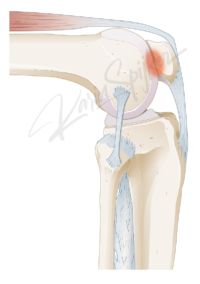
Research shows that the human brain processes visual information significantly faster than text. According to principles related to Cognitive Load Theory, combining visuals with text leads to deeper understanding than text alone.
In medical contexts, where precision can be critical, a medical illustrator helps reduce cognitive overload by eliminating irrelevant detail and highlighting essential structures. For surgeons in training, illustrations can clarify anatomical layers and risk zones. For patients with limited health literacy, illustrations may be the only effective way to understand a diagnosis or procedure.
By applying principles such as visual hierarchy, color coding, and controlled focus, medical illustrations enhance both comprehension and retention.
Applications of medical illustration
Medical illustration supports a wide range of professional healthcare applications.
Clinical education and training
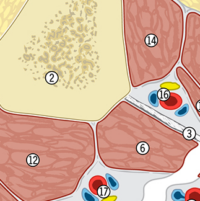
Illustrations are widely used in medical schools, professional training programs, and continuing education. By idealizing anatomy and clearly differentiating structures, illustrations help learners understand spatial relationships that are difficult to observe in real clinical settings.
Surgical procedures and techniques
Step-by-step illustrations of surgical procedures provide clear reference material for training and professional communication. Illustrations can show cross-sections, transparent layers, or sequential stages that photography cannot capture effectively.
Patient communication and education
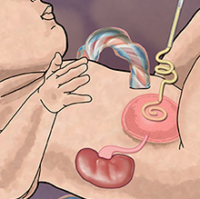
Medical illustrations help healthcare professionals explain diagnoses and treatments without confronting patients with disturbing clinical imagery. Clear visuals support informed consent and improve understanding.
Medical publications and textbooks
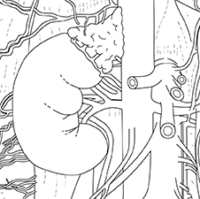
Publishers rely on accurate medical illustrations to support educational content. High-quality visuals enhance clarity, credibility, and learning outcomes in textbooks, manuals, and journals.
Medico-legal and documentation purposes
Objective, precise medical illustrations are used in legal and forensic contexts to clarify injuries, procedures, or medical findings. Neutrality and accuracy are essential in these applications.
Learn more about medical illustration and its applications.
The medical illustration process
Every project follows a structured and transparent workflow to ensure accuracy and efficiency.
1. Briefing and analysis
We define the purpose, target audience, and required level of detail. Reference materials, such as clinical documentation, imaging data, and scientific publications, are reviewed.
2. Research and content validation
Where needed, I conduct additional medical research to fully understand the subject and context.
3. Concept development and sketches
Initial sketches establish composition, perspective, and anatomical focus. This phase allows for content validation before final rendering.
4. Final illustration or animation
The illustration is fully developed, using appropriate techniques ranging from detailed 2D illustrations to 3D visualization and animation.
5. Review and delivery
After final review, files are delivered in formats optimized for print, digital publication, or educational platforms.
A transparent workflow designed for accuracy, clarity, and efficient collaboration.

Medical illustration versus photography, stock images, and AI
Photography and AI-generated imagery can be useful for generic visuals, but they are not suitable for professional medical communication.
Clinical photographs often contain visual noise, blood, instruments, lighting, and surrounding tissue that obscure essential structures. AI-generated images frequently contain subtle but critical anatomical inaccuracies.
A medical illustrator offers:
- verified medical accuracy
- tailored visuals for specific clinical or educational contexts
- control over perspective, emphasis, and abstraction
- exclusive, project-specific imagery
|
Feature
|
Custom Medical Illustrations (Karin Spijker)
|
Stock Images / AI Tools
|
|---|---|---|
|
Scientific accuracy
|
100% verified and based on professional expertise
|
Often generic, outdated, or factually incorrect
|
|
Uniqueness
|
100% verified and based on professional expertise
|
Often generic, outdated, or factually incorrect
|
|
Didactic focus
|
Specifically designed to explain your message
|
General imagery, often lacking instructional focus
|
|
Flexibility
|
Fully adaptable throughout the design process
|
No or very limited customization
|
|
Visual consistency
|
A consistent visual language across materials
|
Mixed styles from multiple sources
|
For professional healthcare communication, accuracy and trust are non-negotiable.

Understanding medical illustration pricing
Every project is custom and depends on scope, complexity, and intended usage. If you would like a clear overview of how pricing is structured, including typical ranges and licensing, you can explore the pricing page.
Frequently asked questions
Find answers to common questions about the illustration process, timelines, pricing, licensing, file delivery, and collaboration.
Work with a medical illustrator
If you are looking for a medical illustrator who combines medical accuracy with clear, responsible visual communication, I would be glad to discuss your project.
As a professional medical illustrator, I collaborate closely with healthcare professionals and institutions to create illustrations that support education, clinical practice, and research.