Molecular and cellular-level accuracy
Developed from verified medical references and aligned with current anatomical and clinical standards. Consistent terminology and visual hierarchy across complete publications.
Visualization of complex biological processes
Illustrations remove unnecessary visual noise and focus on essential structures and processes, improving comprehension for students, researchers, and patients.
A research-driven, data-informed workflow
From briefing to final delivery: sketch approval rounds, precise refinement, and publication-ready files, delivered on schedule.
Professional biomedical illustration
In biomedical science, accuracy is everything. A surgical technique, a molecular mechanism of action, or a complex biological pathway only has value if it can be clearly understood by its intended audience. In an increasingly specialized, data-driven field, text alone is often insufficient to convey complex biomedical concepts.
Biomedical illustration services provide the visual clarity needed to translate scientific complexity into precise, understandable imagery. By combining in-depth biomedical knowledge with advanced visual techniques, biomedical illustrations transform data into structured visual communication that supports research, education, and professional decision-making.
At Karin Spijker, biomedical illustration is approached as a scientific discipline in its own right where accuracy, clarity, and long-term usability are central.
→ Learn more about the broader field of scientific illustration
“I have worked with Karin Spijker for many years on various visual projects. The greatest common denominator in these projects is a qualitative, professional image delivered on time. Karin is entirely at home in both fields, whether an illustration or high-end image editing on photo material.”
 Pauline Speelman, Signorita
“Karin Spijker has performed assignments for me several times to my complete satisfaction, such as logos and two 3D animations. Karin can translate the information from a briefing into the desired end product and can think along with you pleasantly. In doing so, she works accurately, follows the set timetable, and honors her appointments. Karin is also a charming person to work with.”
 Natasja Kardos, Seahorse Solutions
“For my clients, I have asked Karin Spijker more often for customized assignments, especially for more specialized image editing. Karin can conjure up software like Adobe Photoshop and Illustrator. She is very meticulous and also communicates about progress. I highly recommend Karin, her work, and her pleasant cooperation.”
 Marian de Jong, Piri Piri Marketing en Communicatie
What is biomedical illustration?
Biomedical illustration is the specialized field that visualizes medical, anatomical, and biological information for professional use. Unlike general illustration or graphic design, biomedical illustration is grounded in scientific understanding.
A biomedical illustration is not created to decorate content, but to explain, clarify, and educate. It selectively removes visual noise and highlights essential structures, relationships, and processes, often revealing what cannot be shown through photography alone.
Biomedical illustration is used when:
- structures are too complex, internal, or abstract to photograph
- accuracy and scale are critical
- the audience requires clear, unambiguous information
- visuals must remain usable across publications, platforms, and years
Why professional biomedical illustration services matter
As biomedical research advances, so does its complexity. Visual communication must evolve accordingly. Generic stock imagery, templates, or AI-generated visuals often lack the specificity and scientific control required in professional biomedical contexts.
Professional biomedical illustration services offer:
Scientific accuracy
Every illustration is based on verified sources, current literature, and expert input. Anatomical proportions, spatial relationships, and biological processes are carefully validated.
Visual focus and clarity
Illustrations guide the viewer’s attention to what matters most, eliminating distractions while preserving scientific integrity.
Consistency and longevity
Custom biomedical illustrations remain relevant across journals, textbooks, training materials, and digital platforms, without privacy concerns or visual obsolescence.
Adaptation to audience and context
A biomedical illustration for researchers differs fundamentally from one created for clinicians, students, or patients. Style, detail level, and visual language are adjusted accordingly.
Biomedical illustration for life sciences, pharma, and agencies
Biomedical illustration services play a crucial role in life science communication, particularly for pharmaceutical companies, biotech firms, and life science agencies.
→ Explore related scientific illustration services
Explaining a mechanism of action (MoA), a novel therapeutic pathway, or a medical device requires visuals that are both scientifically precise and visually convincing. Generic visuals rarely reflect the uniqueness of a specific molecule, therapy, or technology.
Custom biomedical illustrations provide:
- Brand-aligned visuals that integrate seamlessly with campaign design
- Reusable assets for brochures, websites, congress materials, and animations
- Exclusivity, ensuring that competitors cannot use the same imagery
- Scientific credibility that builds trust with healthcare professionals and investors
Biomedical illustrations for scientific publications and journals
High-quality visuals significantly increase the clarity and impact of scientific publications. Journals increasingly require graphical abstracts or visual summaries to help readers quickly understand research findings.
Biomedical illustrations:
- improve readability and comprehension
- increase engagement and citation potential
- support peer review by clarifying complex data
By working closely with researchers, biomedical illustrators distill complex datasets into clear visual narratives that support the scientific message without oversimplification.
→ See examples in the portfolio
Education, training, and patient communication
Biomedical illustration services are widely used in education and healthcare training, from university-level textbooks to clinical e-learning platforms.
- Medical education benefits from idealized anatomy and clearly separated structures
- Clinical training relies on step-by-step procedural clarity
- Patient communication requires accurate yet approachable visuals that reduce anxiety and improve understanding
- scientific context
- research/biomedical angle
The visual tone is always adapted to the audience, whether highly technical or supportive and explanatory.
About Karin Spijker
I am Karin Spijker, a scientific and medical illustrator with a background in drawing, painting, and textile design. With a master’s in scientific illustration and additional skills in 3D production, I combine accuracy, artistry, and storytelling. My work helps healthcare and publishing teams communicate complex ideas clearly and reliably.
Alongside commissioned projects, I also create independent artworks inspired by nature, anatomy, and landscapes. My mission is to make science and nature accessible, inspiring, and visually engaging.

Custom biomedical illustration vs. DIY tools and AI
While tools such as BioRender or AI-based image generators can be useful for internal drafts, they are rarely suitable for professional biomedical communication.
|
Feature
|
Custom Medical Illustrations (Karin Spijker)
|
Stock Images / AI Tools
|
|---|---|---|
|
Scientific accuracy
|
100% verified and based on professional expertise
|
Often generic, outdated, or factually incorrect
|
|
Uniqueness
|
100% verified and based on professional expertise
|
Often generic, outdated, or factually incorrect
|
|
Didactic focus
|
Specifically designed to explain your message
|
General imagery, often lacking instructional focus
|
|
Flexibility
|
Fully adaptable throughout the design process
|
No or very limited customization
|
|
Visual consistency
|
A consistent visual language across materials
|
Mixed styles from multiple sources
|
In biomedical contexts, small inaccuracies can undermine credibility. Professional biomedical illustration ensures reliability and accountability.
The biomedical illustration process
Biomedical illustration is a collaborative and structured process:
1. Briefing and analysis
Defining purpose, audience, and scientific scope
2. Research and concept development
Reviewing literature, data, imaging, and references
3. Sketch and structure phase
Establishing composition, anatomy, and visual hierarchy
4. Final illustration or visualization
Executed in 2D, vector, or 3D depending on requirements
5. Review and delivery
Optimized files for print, digital, or educational platforms
This approach ensures accuracy, efficiency, and predictable outcomes.
A transparent workflow designed for accuracy, clarity, and efficient collaboration.

Selected biomedical illustration work
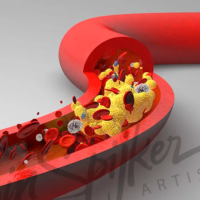
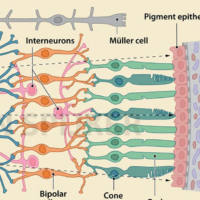
A selection of medical illustrations created for scientific publications, education, and healthcare communication.


Understanding biomedical illustration pricing
Every project is custom and depends on scope, complexity, and intended usage. If you would like a clear overview of how pricing is structured, including typical ranges and licensing, you can explore the pricing page.
Frequently asked questions
Find answers to common questions about the illustration process, timelines, pricing, licensing, file delivery, and collaboration.
Biomedical illustration as a strategic investment
Biomedical illustration services are not an expense; they are an investment in clarity, credibility, and effective knowledge transfer. In research, education, and healthcare communication, visual precision directly supports understanding and trust.
If you are looking for biomedical illustration services that combine scientific accuracy with visual clarity and long-term usability, or want to learn how to hire a medical illustrator.