Evidence-based scientific accuracy
Developed from verified medical references and aligned with current anatomical and clinical standards. Consistent terminology and visual hierarchy across complete publications.
Clarity for complex scientific concepts
Illustrations remove unnecessary visual noise and focus on essential structures and processes, improving comprehension for students, researchers, and patients.
A structured, research-focused workflow
From briefing to final delivery: sketch approval rounds, precise refinement, and publication-ready files, delivered on schedule.
Professional scientific illustration
In modern science, precision and data are essential, but data alone rarely tell the full story. Researchers generate vast amounts of information, yet tables, charts, and raw figures often fail to convey meaning without interpretation. To ensure that scientific insights truly resonate with their intended audience, whether peers, students, editors, investors, or the wider public, visual translation is indispensable.
As a professional scientific illustrator, I help researchers, publishers, and life-science organizations transform complex scientific information into clear, accurate, and visually compelling illustrations. My work bridges the gap between raw data and understanding without compromising scientific integrity.
My name is Karin Spijker. I combine in-depth scientific knowledge with refined artistic craftsmanship. Where text becomes abstract, dense, or inaccessible, scientific illustration provides immediate clarity. In today’s competitive academic and research environment, visual communication is no longer optional; it is a strategic asset.
“I have worked with Karin Spijker for many years on various visual projects. The greatest common denominator in these projects is a qualitative, professional image delivered on time. Karin is entirely at home in both fields, whether an illustration or high-end image editing on photo material.”
 Pauline Speelman, Signorita
“Karin Spijker has performed assignments for me several times to my complete satisfaction, such as logos and two 3D animations. Karin can translate the information from a briefing into the desired end product and can think along with you pleasantly. In doing so, she works accurately, follows the set timetable, and honors her appointments. Karin is also a charming person to work with.”
 Natasja Kardos, Seahorse Solutions
“For my clients, I have asked Karin Spijker more often for customized assignments, especially for more specialized image editing. Karin can conjure up software like Adobe Photoshop and Illustrator. She is very meticulous and also communicates about progress. I highly recommend Karin, her work, and her pleasant cooperation.”
 Marian de Jong, Piri Piri Marketing en Communicatie
What is scientific illustration?
Scientific illustration is a specialized discipline at the intersection of science, education, and visual communication. Its primary purpose is not decoration but explanation. Every illustration is designed to communicate scientific information objectively, accurately, and didactically.
Unlike artistic illustration, where interpretation and expression are central, scientific illustration is entirely fact-driven. Each structure, proportion, and relationship must be scientifically correct. This requires deep subject understanding; it is impossible to illustrate what you do not fully comprehend.
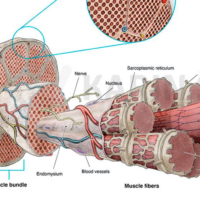
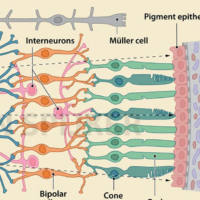
As a scientific illustrator, I act as a visual interpreter. I filter out irrelevant details often present in photographs or scans, such as visual noise, lighting artifacts, or distracting context, and emphasize exactly what needs to be understood. This is why illustration is often more effective than photography for education, instruction, and conceptual clarity.
My working process
I work through a structured, transparent process designed for scientific collaboration:
1. Briefing and context
Defining purpose, audience, scope, and technical requirements.
2. Concept and sketch phase
Establishing composition, focus, and narrative logic.
3. Final illustration
Developing the image with attention to detail, accuracy, and visual clarity.
4. Review and delivery
Scientific validation and delivery in publication-ready formats.
You collaborate directly with the scientific illustrator, responsible for both content and visual execution, ensuring clarity, consistency, and efficiency throughout the project.
A transparent workflow designed for accuracy, clarity, and efficient collaboration.

Why scientific illustration increases impact
Scientific visuals are not just supportive; they directly influence how research is perceived and received.
Studies consistently show that publications with high-quality visual material are:
- read more frequently
- cited more often
- shared more widely
The human brain processes visual information far faster than text. A strong graphical abstract or schematic figure often determines whether a reader engages with a paper at all. Many leading journals now require visual summaries as part of the submission process.
My clients, ranging from academic research groups to biotech and pharmaceutical organizations, use scientific illustration to achieve:
- Faster comprehension
Complex mechanisms become understandable at a glance, reducing cognitive load. - Stronger editorial impression
Clear visuals subconsciously signal rigor and professionalism to reviewers and editors. - Wider dissemination
Visuals are easier to reuse for presentations, press releases, and educational platforms. - Effective stakeholder communication
Mechanism-of-action (MoA) illustrations help explain advanced technology to non-specialist audiences.
About Karin Spijker
I am Karin Spijker, a scientific and medical illustrator with a background in drawing, painting, and textile design. With a master’s in scientific illustration and additional skills in 3D production, I combine accuracy, artistry, and storytelling. My work helps healthcare and publishing teams communicate complex ideas clearly and reliably.
Alongside commissioned projects, I also create independent artworks inspired by nature, anatomy, and landscapes. My mission is to make science and nature accessible, inspiring, and visually engaging.

Scientific illustration for publications and journals
If you are preparing a manuscript for a scientific journal, the quality of your figures matters as much as the text itself. Weak visuals can undermine strong data.
I create scientific illustrations that meet strict publisher and journal guidelines, including:
- Graphical abstracts
Visual summaries that convey the study’s core message. - Schematic figures
Clear depictions of experimental setups, biological pathways, or conceptual models. - Figure refinement and consistency
Harmonizing style, color, typography, and layout across all figures.
Technical considerations are built into the process:
- correct resolution and file formats (TIFF, EPS, PDF)
- clear visual hierarchy and labeling
- color-safe palettes suitable for print and accessibility
Because I speak the language of science, collaboration is efficient. We focus on the content, not on explaining basic principles.
Beyond medicine:
nature and natural history illustration
Scientific illustration is not limited to biomedical subjects. I also work extensively with natural history illustration, including animals, plants, and ecological subjects.
Nature illustration requires a different level of precision and taxonomic accuracy. Whether illustrating a bird species, a botanical specimen, an insect, or a fossil, the image must support correct identification. Details such as morphology, texture, growth patterns, and scale are critical.
Depending on the project, I work with:
- traditional media (pencil, watercolor) for organic, lifelike qualities
- digital techniques for clarity, scalability, and integration into modern publishing workflows
These illustrations are used by museums, educational publishers, researchers, and conservation organizations where accuracy and credibility are paramount.



Custom illustration vs. stock images and AI tools
Generic visuals may seem convenient, but they carry risks in scientific contexts.
Stock imagery and AI-generated visuals are:
- often generalized or outdated
- rarely tailored to specific research questions
- sometimes scientifically incorrect
- shared by countless other users
|
Feature
|
Custom Medical Illustrations (Karin Spijker)
|
Stock Images / AI Tools
|
|---|---|---|
|
Scientific accuracy
|
100% verified and based on professional expertise
|
Often generic, outdated, or factually incorrect
|
|
Uniqueness
|
100% verified and based on professional expertise
|
Often generic, outdated, or factually incorrect
|
|
Didactic focus
|
Specifically designed to explain your message
|
General imagery, often lacking instructional focus
|
|
Flexibility
|
Fully adaptable throughout the design process
|
No or very limited customization
|
|
Visual consistency
|
A consistent visual language across materials
|
Mixed styles from multiple sources
|
Scientific illustration, by contrast, is bespoke. Each image is created specifically for your research, your message, and your audience, ensuring accuracy, originality, and professional credibility.
Understanding medical illustration pricing
Every project is custom and depends on scope, complexity, and intended usage. If you would like a clear overview of how pricing is structured, including typical ranges and licensing, you can explore the pricing page.
Frequently asked questions
Find answers to common questions about the illustration process, timelines, pricing, licensing, file delivery, and collaboration.
Ready to strengthen your research with clear scientific visuals?
Scientific insight deserves clarity. Whether you need illustrations for a journal publication, a research presentation, educational material, or natural history work, I help translate complexity into understanding that is accurate and convincing.
Explore my portfolio or get in touch to discuss your project.