Observation-based biological accuracy
Developed from verified medical references and aligned with current anatomical and clinical standards. Consistent terminology and visual hierarchy across complete publications.
Clarity across biological systems
Illustrations remove unnecessary visual noise and focus on essential structures and processes, improving comprehension for students, researchers, and patients.
Structured research-based workflow
From briefing to final delivery: sketch approval rounds, precise refinement, and publication-ready files, delivered on schedule.
Professional natural history illustration services
Natural history illustration is the discipline of translating the complexity of the natural world into clear, scientifically accurate visual communication. From zoological and botanical subjects to ecosystems, comparative anatomy, and biological structures, natural history illustration helps researchers, publishers, museums, and educators communicate information with greater clarity and precision.
In scientific contexts, visual communication is not decorative; it is functional. Biological systems are layered, complex, and often difficult to interpret through photography alone. A natural history illustration allows selective emphasis, reconstruction, and visual organization, enabling clarification of structures, relationships, and processes that would otherwise remain obscured.
I am Karin Spijker, a scientific and medical illustrator working with researchers, universities, publishers, and educational organizations to create publication-ready visuals for biology, ecology, and other natural sciences, as well as for scientific communication.
Related pages:
→ scientific nature drawing
→ scientific illustration
→ portfolio
“I have worked with Karin Spijker for many years on various visual projects. The greatest common denominator in these projects is a qualitative, professional image delivered on time. Karin is entirely at home in both fields, whether an illustration or high-end image editing on photo material.”
 Pauline Speelman, Signorita
“Karin Spijker has performed assignments for me several times to my complete satisfaction, such as logos and two 3D animations. Karin can translate the information from a briefing into the desired end product and can think along with you pleasantly. In doing so, she works accurately, follows the set timetable, and honors her appointments. Karin is also a charming person to work with.”
 Natasja Kardos, Seahorse Solutions
“For my clients, I have asked Karin Spijker more often for customized assignments, especially for more specialized image editing. Karin can conjure up software like Adobe Photoshop and Illustrator. She is very meticulous and also communicates about progress. I highly recommend Karin, her work, and her pleasant cooperation.”
 Marian de Jong, Piri Piri Marketing en Communicatie
Translating biological complexity into visual clarity
Research often represents years of observation, analysis, and fieldwork. The challenge is rarely the science itself, but the communication of that science.
How do you clearly explain ecological relationships, layered anatomical systems, environmental change, or biological interactions without oversimplifying the underlying information?
Natural history illustration provides a structured visual translation of biological complexity. Rather than reducing scientific nuance, illustration organizes information into a coherent visual hierarchy that supports understanding while maintaining scientific integrity.
This is particularly important in fields such as biology, ecology, zoology, botany, paleontology, and environmental sciences, where visual interpretation plays a central role in research publication and education.
A well-constructed natural history illustration improves clarity, strengthens communication, and helps scientific information remain accessible across different audiences, from specialists and peer reviewers to students and museum visitors.
What is natural history illustration?
Natural history illustration focuses on the accurate visual representation of organisms, ecosystems, and biological structures based on scientific observation and interpretation. Unlike decorative illustration, the discipline is grounded in morphology, structural accuracy, and biological understanding.
Subjects may include animals, plants, habitats, comparative anatomy, ecological systems, microscopic structures, and species reconstruction. In every case, the purpose remains the same: to communicate biological reality as clearly and accurately as possible.
Scientific natural history illustration combines observation, scientific literature, comparative analysis, and visual hierarchy to create images that support research, publication, and scientific education. The illustrator is not merely copying a reference image, but interpreting biological information and organizing it into a coherent visual structure.
This process requires both artistic skill and scientific understanding. Accuracy depends on the ability to recognize structural relationships, interpret biological references correctly, and translate complex information into visuals that remain reliable and publication-ready.
Why illustration remains essential in science
Even with advanced imaging technologies, scientific illustration remains essential because it explains rather than simply records.
A photograph captures everything within the frame. An illustration selects relevant information, removes distractions, and structures the image around the communication goal. This allows biological subjects to be presented with far greater clarity and control.
Scientific illustration makes it possible to:
- isolate important anatomical or biological structures
- remove irrelevant visual information and environmental noise
- combine multiple observations into one coherent image
- reconstruct incomplete biological material
- highlight relationships that may otherwise remain difficult to interpret
In scientific publishing and education, this level of visual control is critical. Biological systems are often too complex, layered, or partially hidden to communicate effectively through photography alone. Natural history illustration creates visual clarity while preserving scientific accuracy.
Morphology, observation, and scientific interpretation
Natural history illustration requires more than technical drawing skill. Scientific accuracy depends on careful observation, interpretation of biological information, and understanding of structural relationships.
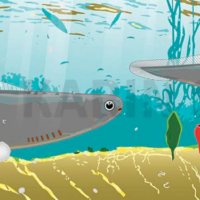
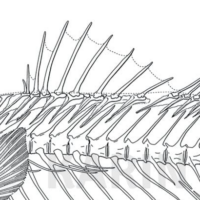
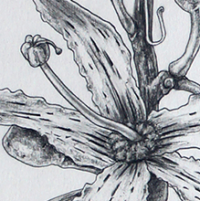
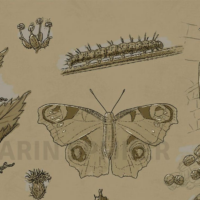
Illustrations may need to show developmental stages, internal organization, comparative anatomy, ecological interactions, or microscopic and macroscopic structures within a single image. A botanical illustration, for example, may involve analysis of herbarium material, field photography, venation patterns, reproductive structures, and microscopic references before the final composition can be developed accurately.
Similarly, zoological and ecological illustrations often require reconstruction based on morphology, comparative anatomy, environmental context, and scientific literature. The resulting image becomes a scientifically informed visual interpretation rather than a literal copy of a single reference photograph.
This interpretive aspect is one of the defining strengths of natural history illustration. The illustration is designed to communicate essential biological information with clarity, consistency, and scientific credibility.
About Karin Spijker
I am Karin Spijker, a scientific and medical illustrator with a background in drawing, painting, and textile design. With a master’s in scientific illustration and additional skills in 3D production, I combine accuracy, artistry, and storytelling. My work helps healthcare and publishing teams communicate complex ideas clearly and reliably.
Alongside commissioned projects, I also create independent artworks inspired by nature, anatomy, and landscapes. My mission is to make science and nature accessible, inspiring, and visually engaging.

Reconstructing organisms, ecosystems, and biological systems
One of the most important functions of natural history illustration is reconstruction. In many scientific situations, complete visual information simply does not exist. Species may be only partially documented, fossils may be fragmented, or ecosystems may be only partially observable.
Illustration makes it possible to reconstruct organisms and biological systems based on:
- morphology and comparative anatomy
- scientific literature and observational data
- ecological and environmental context
- microscopic and macroscopic reference material
- taxonomic and structural analysis
This process allows researchers and educators to communicate scientific concepts in a visually coherent and biologically reliable manner. In fields such as paleontology, zoology, ecology, and botany, illustration often serves as an essential bridge between fragmented data and scientific understanding.

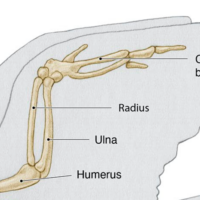
Applications of natural history illustration
Natural history illustration is used across scientific publishing, biology education, museums, environmental communication, and research outreach. In peer-reviewed publications, illustrations help clarify structures, species characteristics, and ecological relationships that are difficult to communicate through text or photography alone.
Applications include:
- peer-reviewed biology and ecology publications
- scientific atlases and field guides
- botanical and zoological research communication
- museum exhibitions and educational displays
- biodiversity and environmental outreach
- university-level biology and ecology education
- e-learning and scientific training platforms
In museums and exhibitions, natural history illustration helps bridge the gap between specialist knowledge and public understanding. In education, layered visuals improve comprehension and retention by structuring complex information into accessible visual systems.
Illustration also plays an increasingly important role in environmental and biodiversity communication, where ecosystems, species relationships, and environmental change must often be explained to audiences with different levels of expertise.
Related:
→ scientific illustration services
Natural history illustration versus stock images and AI-generated visuals
Generic visuals may be sufficient for simple communication, but scientific work requires precision, interpretation, and control.
Stock images and AI-generated visuals often lack biological specificity and may introduce inaccuracies in morphology, anatomy, ecological relationships, or structural detail. They also provide limited control over emphasis, interpretation, and scientific hierarchy.
A custom natural history illustration is built around the specific communication goal. Every structure, relationship, and visual decision can be adjusted to align with scientific standards, publication requirements, and educational objectives.
|
Feature
|
Custom Medical Illustrations (Karin Spijker)
|
Stock Images / AI Tools
|
|---|---|---|
|
Scientific accuracy
|
100% verified and based on professional expertise
|
Often generic, outdated, or factually incorrect
|
|
Uniqueness
|
100% verified and based on professional expertise
|
Often generic, outdated, or factually incorrect
|
|
Didactic focus
|
Specifically designed to explain your message
|
General imagery, often lacking instructional focus
|
|
Flexibility
|
Fully adaptable throughout the design process
|
No or very limited customization
|
|
Visual consistency
|
A consistent visual language across materials
|
Mixed styles from multiple sources
|
For high-level scientific communication, this level of control is essential. Accuracy is not optional; it directly affects understanding, interpretation, and credibility.
The natural history illustration process
Each project follows a structured workflow designed to ensure scientific accuracy and visual clarity from the earliest concept stages to final delivery.
The process typically includes:
- briefing and analysis of scientific source material
- research and reference study
- concept sketches and composition development
- refinement through structured feedback rounds
- final production and publication-ready preparation
Depending on the project, illustrations may be prepared for scientific journals, museum exhibitions, educational print material, digital platforms, presentations, or large-format displays.
This structured approach ensures consistency, reliability, and efficient collaboration throughout the project.
A transparent workflow designed for accuracy, clarity, and efficient collaboration.

Workflow, collaboration, and publication standards
Professional collaboration depends on clarity, predictability, and communication. Projects begin with an analysis of the available material, a discussion of goals and audience, and alignment on deadlines, formats, and technical requirements.
Timelines vary depending on the amount of research, the complexity of the illustrations, and the number of revision rounds required. Smaller illustrations may take several days, while larger research-intensive projects can require multiple weeks of development and refinement.
Final artwork is delivered according to professional publication standards, including:
- resolution requirements
- file formatting
- colour profiles
- print and digital optimization
Licensing and usage rights are discussed clearly at the beginning of the project. In most cases, copyright remains with the illustrator, while clients receive a tailored usage license appropriate for publication, education, or exhibition.
Related:
→ medical illustration pricing
Understanding natural history illustration pricing
Every project is custom and depends on scope, complexity, and intended usage. If you would like a clear overview of how pricing is structured, including typical ranges and licensing, you can explore the pricing page.
Frequently asked questions
Find answers to common questions about the illustration process, timelines, pricing, licensing, file delivery, and collaboration.
Start a natural history illustration project
If you are looking for a natural history illustrator who combines scientific understanding with clear visual communication, I would be happy to support your project.
Whether the focus is research, publication, museum communication, or education, the goal remains the same: creating visuals that communicate biological information with clarity, accuracy, and scientific integrity.