Anatomical accuracy
Illustrations developed from validated anatomical references, scientific source material, and clear structural understanding.
Clarity across complex structures
Visuals designed to explain layered anatomy, spatial relationships, and functional connections with precision.
Structured visual communication
A clear workflow from briefing and research to final anatomy illustration for publication, education, or clinical use.
Anatomy illustration for medical and scientific communication
Anatomy illustration is not just about visualizing structure. It is about translating complex medical knowledge into images that can be trusted in professional and clinical contexts.
As research becomes more specialized, text alone is often insufficient to convey key ideas clearly. A well-developed anatomy illustration transforms complex anatomical structures into visuals that are immediately understandable, without losing scientific depth.
As a medical and scientific illustrator, I work with healthcare organizations, academic institutions, publishers, and life sciences companies to create custom anatomy illustrations that combine scientific accuracy with visual clarity and professional execution.
These illustrations are designed to support real-world applications, including research publications, education, and clinical communication. You can explore the broader scope of this work within my medical illustration services.
Read more:
→ human anatomy illustration
→ animal anatomy illustration
→ botanical illustration
“I have worked with Karin Spijker for many years on various visual projects. The greatest common denominator in these projects is a qualitative, professional image delivered on time. Karin is entirely at home in both fields, whether an illustration or high-end image editing on photo material.”
 Pauline Speelman, Signorita
“Karin Spijker has performed assignments for me several times to my complete satisfaction, such as logos and two 3D animations. Karin can translate the information from a briefing into the desired end product and can think along with you pleasantly. In doing so, she works accurately, follows the set timetable, and honors her appointments. Karin is also a charming person to work with.”
 Natasja Kardos, Seahorse Solutions
“For my clients, I have asked Karin Spijker more often for customized assignments, especially for more specialized image editing. Karin can conjure up software like Adobe Photoshop and Illustrator. She is very meticulous and also communicates about progress. I highly recommend Karin, her work, and her pleasant cooperation.”
 Marian de Jong, Piri Piri Marketing en Communicatie
Anatomy Illustration Focus Areas
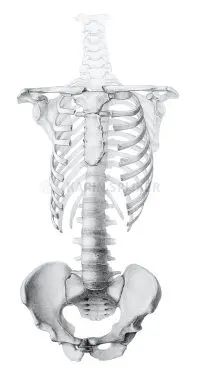
Seeking high-quality human anatomy illustrations? I create precise anatomical drawings for medical education, scientific publications, and healthcare communication.

Looking for accurate animal anatomy illustrations? I create detailed anatomical drawings that clearly visualize structure, function, and comparative anatomy.

Precise botanical visuals that clarify plant structures, growth patterns, and anatomical details for research, education, and scientific communication.
Why custom anatomy illustration matters
- focus on relevant anatomical structures
- removal of visual distractions
- accurate spatial relationships
From medical complexity to visual clarity
Creating a high-quality anatomy illustration requires more than technical drawing skills. It requires a profound understanding of anatomy, physiology, and medical context.
Every project starts with a structured analysis of the subject. This may include reviewing literature, studying medical references, or working with clinical input such as imaging or documentation.
Only once this foundation is in place does the visual development begin.
The goal is always to translate complexity into clarity, while maintaining full scientific integrity. If you are interested in how this is structured step by step, you can read more about the medical illustration process.
- Briefing and analysis: defining goals, audience, and scope
- Concept development: establishing composition and structure
- Production: building detail, depth, and clarity
- Review and delivery: refinement and final output
A transparent workflow designed for accuracy, clarity, and efficient collaboration.

Where anatomy illustration is used
Custom anatomy illustrations are used across a wide range of professional contexts. While the purpose is always clarity, the application depends on the audience and the intended use.
In clinical environments, illustrations support surgical planning and procedural communication. In scientific publishing, they help translate complex findings into visual formats suitable for peer-reviewed journals.
In the life sciences and pharmaceutical industries, anatomical illustrations help explain biological mechanisms at varying levels of complexity. In education, it supports learning by making spatial relationships easier to understand and retain.
Where appropriate, visual communication extends to patients as well. In this context, illustrations are designed to inform clearly without creating unnecessary visual stress.
Depending on your use case, you may want to explore more specific applications such as medical illustration for research publications, pharma, or e-learning and health education.
Specialized anatomy illustration areas
Certain anatomical regions require exceptional precision due to their complexity and clinical relevance.
The human face is one of the most demanding areas. It contains a dense network of muscles, nerves, and vascular structures within a limited space. A facial anatomy illustration must accurately represent these relationships, as even minor deviations can impact its usability in clinical or educational settings.
Similarly, the anatomy of the nose and sinuses presents unique challenges. These structures are largely internal and difficult to interpret through standard imaging alone. A carefully crafted illustration of nasal anatomy can reveal spatial relationships that are otherwise difficult to communicate.
In research and education, comparative anatomy introduces additional complexity. When working across species, consistency and accuracy become essential.
For these types of projects, you may also find relevant information on animal anatomy illustration, comparative anatomy, or veterinary medical illustration.
About Karin Spijker
I am Karin Spijker, a scientific and medical illustrator with a background in drawing, painting, and textile design. With a master’s in scientific illustration and additional skills in 3D production, I combine accuracy, artistry, and storytelling. My work helps healthcare and publishing teams communicate complex ideas clearly and reliably.
Alongside commissioned projects, I also create independent artworks inspired by nature, anatomy, and landscapes. My mission is to make science and nature accessible, inspiring, and visually engaging.

Custom illustration vs stock and AI-generated visuals
It can be tempting to use faster or more affordable solutions such as stock imagery or AI-generated visuals. While these tools can be useful for simple or internal purposes, they are rarely suitable for professional medical communication.
The difference lies in both accuracy and intent.
Stock and AI visuals are typically generic and not built around a specific case. They often lack the anatomical precision required for clinical or scientific use and may, in some cases, introduce subtle inaccuracies.
A custom anatomy illustration, by contrast, is developed with a clear objective and grounded in verified medical knowledge. In professional environments such as research, clinical communication, or publishing, this distinction becomes critical.
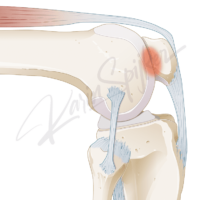

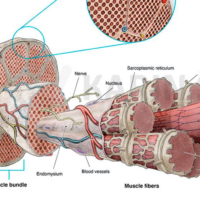


Scientific accuracy as a foundation
In medical and scientific contexts, visual communication must meet the same standards as written content. Every element within an anatomy illustration must be accurate, intentional, and aligned with current medical knowledge.
Anatomical inaccuracies can lead to misinterpretation, reduce credibility, or negatively affect outcomes.
- anatomical relationships are correct
- visual hierarchy supports understanding
- the image communicates clearly within its context
Designed for international professional use
Most medical and scientific communication takes place in an international context. This requires visuals that are universally understandable and professionally accepted across disciplines.
All illustrations are developed with this in mind. They align with international standards, use consistent terminology, and are suitable for a wide range of outputs, including publications, presentations, and digital platforms.
What to consider when commissioning anatomy illustrations
- medical understanding
- visual communication skills
- structured collaboration
The level of detail, complexity, and intended use directly influence the scope of a project. For a transparent breakdown of how this translates into costs, see the medical illustration pricing page.
Every project is custom and depends on scope, complexity, and intended usage. If you would like a clear overview of how pricing is structured, including typical ranges and licensing, you can explore the pricing page.
Long-term value of anatomy illustration
- publications
- presentations
- educational materials
- digital platforms
What you can expect when working together
- direct communication and clear alignment from the start
- defined scope, timelines, and revision rounds
- visuals tailored to your specific content, audience, and goals
The focus is always on creating work that is both scientifically accurate and visually effective.
Related pages
→ medical illustration services
→ custom medical illustrations
→ medical illustration pricing
→ portfolio
Nog links maken naar:
- /human-anatomy-illustration
- /animal-anatomy-illustration
- /comparative-anatomy-illustration
- /canine-anatomy-illustration
- /feline-anatomy-illustration
- /equine-anatomy-illustration
- /avian-anatomy-illustration
- /fish-anatomy-illustration
- /botanical-illustration
- /veterinary-medical-illustration
Frequently asked questions
Find answers to common questions about the illustration process, timelines, pricing, licensing, file delivery, and collaboration.
Start your anatomy illustration project
If you are looking for a reliable partner to translate complex anatomical information into clear and accurate visuals, I can help.
Whether your project involves research, education, or clinical communication, the objective remains the same: to create visuals that communicate with precision and clarity.
You are welcome to get in touch to discuss your project or request a tailored quote.
Work directly with a specialized medical illustrator
for accurate, publication-ready visuals tailored to your field.
Ready to collaborate on a medical illustration project?
Clear, accurate, and aligned with your medical content