Scientifically grounded animation
Animations developed from verified biological and medical references with focus on structural and procedural accuracy.
Visualizing dynamic biological processes
Motion-based visualization designed to explain interactions, mechanisms, and sequences that static imagery cannot fully communicate.
Structured biomedical production workflow
From scientific briefing and storyboarding to final rendering, each stage is designed for clarity, consistency, and collaboration.
Professional biomedical animation
Biomedical animation translates complex biological and medical information into clear visual communication through motion, sequencing, and scientific visualization. In fields such as biotechnology, pharmaceutical research, life sciences, and medical education, animation enables the explanation of processes and interactions that are difficult to convey through text or static imagery alone.
From molecular pathways and cellular interactions to surgical procedures and medical device functionality, biomedical animation helps audiences understand how systems behave over time. The goal is not visual spectacle, but scientific clarity, credibility, and communication accuracy.
I am Karin Spijker, a scientific and medical illustrator with experience in biomedical visualization, anatomy, and 3D production. I create biomedical animations and scientific motion visuals designed for research communication, education, pharmaceutical communication, and advanced medical explanation.
Related pages:
→ biomedical illustration
→ pharmaceutical medical illustration
→ scientific animation visualization
→ portfolio
“I have worked with Karin Spijker for many years on various visual projects. The greatest common denominator in these projects is a qualitative, professional image delivered on time. Karin is entirely at home in both fields, whether an illustration or high-end image editing on photo material.”
 Pauline Speelman, Signorita
“Karin Spijker has performed assignments for me several times to my complete satisfaction, such as logos and two 3D animations. Karin can translate the information from a briefing into the desired end product and can think along with you pleasantly. In doing so, she works accurately, follows the set timetable, and honors her appointments. Karin is also a charming person to work with.”
 Natasja Kardos, Seahorse Solutions
“For my clients, I have asked Karin Spijker more often for customized assignments, especially for more specialized image editing. Karin can conjure up software like Adobe Photoshop and Illustrator. She is very meticulous and also communicates about progress. I highly recommend Karin, her work, and her pleasant cooperation.”
 Marian de Jong, Piri Piri Marketing en Communicatie
What is biomedical animation?
Biomedical animation combines scientific visualization, medical illustration, and motion design to explain biological and medical processes over time. By introducing movement, timing, and spatial interaction, animation can communicate mechanisms and sequences that remain difficult to explain through static visuals alone.
This form of visualization is widely used in life sciences, pharmaceutical communication, medical education, and biotech because it allows viewers to follow complex interactions step by step.
Applications include:
- Mechanism of Action (MoA) visualization
- molecular and cellular processes
- physiological and pathological mechanisms
- surgical and interventional procedures
- medical device visualization
- scientific education and training
Unlike generic animation, biomedical animation depends on scientific interpretation and structural accuracy. Every movement, interaction, and visual relationship must align with verified biological and medical knowledge.
Explaining complex science through motion
Biomedical animation is widely used throughout the life cycle of scientific and medical innovation. Pharmaceutical companies, biotech organizations, healthcare institutions, and educational platforms increasingly rely on animation to communicate highly specialized information with greater clarity and consistency.
Common applications include:
- Mechanism of Action (MoA) animation
- molecular pathway visualization
- pharmaceutical and biotech communication
- congress and investor presentations
- scientific education and e-learning
- medical affairs communication
- medical device explanation and visualization
In pharmaceutical and biotech communication, animation is particularly valuable because it allows abstract biological processes to be translated into structured visual narratives. This is essential when communicating novel therapies, technologies, or research findings to audiences with different levels of expertise.
Related:
→ pharmaceutical medical illustration
→ biomedical illustration
Biomedical animation for education and scientific communication
Animation plays an important role in medical and scientific education because it improves comprehension of systems that are difficult to observe directly. Biological interactions often occur at the microscopic or molecular level, making them abstract and challenging to explain with static visuals alone.
Biomedical animation helps:
- structure complex information
- guide visual attention
- clarify temporal sequences
- improve retention and understanding
- reduce unnecessary visual complexity
In educational contexts, this creates a more effective learning experience while maintaining scientific integrity and accuracy.
Animations can also be adapted into shorter clips, loops, still frames, or presentation assets, allowing the same visual system to be reused across multiple educational and communication platforms.
Scientific marketing without compromising accuracy
Biomedical animation is increasingly used within pharmaceutical and biotech marketing, but effective scientific communication requires discipline. The objective is not exaggeration or visual spectacle, but clarity, trust, and scientific reliability.
High-quality biomedical animations:
- improve engagement and viewing time
- support explanation rather than persuasion alone
- clarify complex scientific value propositions
- strengthen communication with investors and stakeholders
- create consistent messaging across platforms
Scientific marketing visuals must remain grounded in accurate biological understanding. Aesthetic quality supports communication, but scientific integrity remains the foundation of the work.
The biomedical animation process
Each biomedical animation project follows a structured workflow designed to ensure scientific accuracy, visual consistency, and efficient collaboration throughout production.
The process typically includes:
- scientific briefing and reference analysis
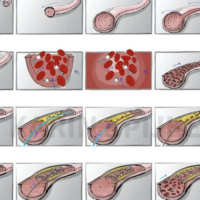
- scriptwriting and storyboard development
- 2D or 3D asset creation
- animation and motion refinement
- rendering and final post-production
Before animation begins, the narrative structure and scientific direction are established through scripting and storyboarding. This stage is essential because it defines timing, sequencing, emphasis, and visual hierarchy before production becomes technically intensive.
Depending on the project, animations may include anatomical modeling, molecular visualization, procedural explanation, motion graphics, labeling systems, voice-over integration, or presentation-specific outputs.
A transparent workflow designed for accuracy, clarity, and efficient collaboration.

About Karin Spijker
I am Karin Spijker, a scientific and medical illustrator with a background in drawing, painting, and textile design. With a master’s in scientific illustration and additional skills in 3D production, I combine accuracy, artistry, and storytelling. My work helps healthcare and publishing teams communicate complex ideas clearly and reliably.
Alongside commissioned projects, I also create independent artworks inspired by nature, anatomy, and landscapes. My mission is to make science and nature accessible, inspiring, and visually engaging.

Custom biomedical animation versus generic solutions
Stock animations and automated tools may appear efficient, but they rarely meet the standards required for scientific or medical communication. Generic visuals often lack specificity, scientific nuance, and control over visual interpretation.
Custom biomedical animation provides:
- scientifically verified visualization
- project-specific communication design
- consistency with your research or brand identity
- clear licensing and usage structures
- adaptability across presentations, education, and digital platforms
In biomedical communication, approximation weakens credibility. Precision matters because the animation itself becomes part of the scientific narrative.
Pricing and production considerations
Biomedical animation projects vary significantly in scope and complexity. Costs depend on factors such as animation duration, scientific depth, visual style, and technical production requirements.
Key factors include:
- animation length and complexity
- molecular, anatomical, or procedural depth
- level of 2D or 3D production
- custom modeling requirements
- licensing scope and intended usage
Because biomedical animations are frequently reused across research, education, presentations, and marketing, they often provide long-term communication value beyond the initial production context.
Collaboration, workflow, and timelines
Professional biomedical animation requires structured collaboration and clear communication throughout the production process. Projects begin with analysis of scientific material, alignment with goals and audience, and discussion of timelines and technical requirements.
Depending on complexity, production timelines may range from several weeks to multiple months. Molecular-level animations, procedural simulations, and highly detailed 3D visualization typically require more extensive development and refinement.
Feedback is integrated at defined stages of the process, particularly during scripting and storyboard development, where revisions remain most efficient and strategically valuable.


Frequently asked questions
Find answers to common questions about the illustration process, timelines, pricing, licensing, file delivery, and collaboration.
Bringing science to life through motion
Biomedical animation allows complex science to be visualized, understood, and remembered. Whether the focus is on pharmaceutical communication, scientific education, biotechnology, or research visualization, the quality of visual communication directly influences understanding and impact.
If you are looking for biomedical animation services that combine scientific accuracy with clear visual communication and a structured professional workflow, I would be happy to discuss your project.