Clarity
Transform complex medical concepts into clear, easy-to-understand visuals.
Accuracy
Every animation is based on precise anatomy and reliable scientific detail.
Engagement
Bring your message to life with animations that captivate and inform your audience.
Medical and scientific animation
Medical and scientific animation brings illustrations to life. By adding movement, complex concepts such as anatomy, procedures, and biological processes become easier to understand. These clear, engaging animations are ideal for education, presentations, and patient communication. Each project combines accuracy with visual appeal, ensuring reliable and effective storytelling.
Animation adds a new dimension to medical illustration by showing not only what something looks like, but also how it works. With medical animation and scientific animation, complex topics become easier to understand, whether for professionals, students, or patients.
I create concise and accurate anatomy animations that highlight essential structures and processes. These animations are particularly effective for medical education, research communication, and patient information materials. A clear animation can illustrate dynamic concepts such as surgical procedures, disease mechanisms, or physiological functions in a way that static images cannot.
Each project begins with a clear storyboard and style concept. From there, I combine the precision of medical illustration animation with engaging motion design to ensure both accuracy and visual appeal. The goal is always the same: clarity, reliability, and effective communication.
“Karin Spijker has performed assignments for me several times to my complete satisfaction, such as logos and two 3D animations. Karin can translate the information from a briefing into the desired end product and can think along with you pleasantly. In doing so, she works accurately, follows the set timetable, and honors her appointments. Karin is also a charming person to work with.”
 Natasja Kardos, Seahorse Solutions
What is medical animation?
Medical animation is the use of animated visuals – often in 3D – to explain anatomical, physiological, or pathological processes over time. Unlike static images, animation introduces movement and sequence, allowing you to show how something works rather than just what it looks like.
This is especially valuable when explaining:
- surgical procedures
- disease mechanisms
- treatment pathways
- device functionality
- anatomical relationships over time
Where static visuals provide clarity, animation adds temporal understanding. The strongest results are achieved when both are combined.
See also:
Medical animation as part of a visual communication strategy
Medical animation is not decoration. It is a communication tool, but one that must be used deliberately.
In many projects, animation is most effective when supported by clear, structured medical illustrations. Illustrations provide control, precision, and focus. Animation builds on that foundation to explain processes, transitions, and interactions.
This “illustration-first” approach ensures that:
- complex information is introduced clearly
- visual hierarchy is controlled
- motion enhances understanding instead of distracting from it
At karinspijker.com, animation is always developed as part of a broader visual system. This results in consistent, high-quality communication across publications, presentations, and digital platforms.
About Karin Spijker
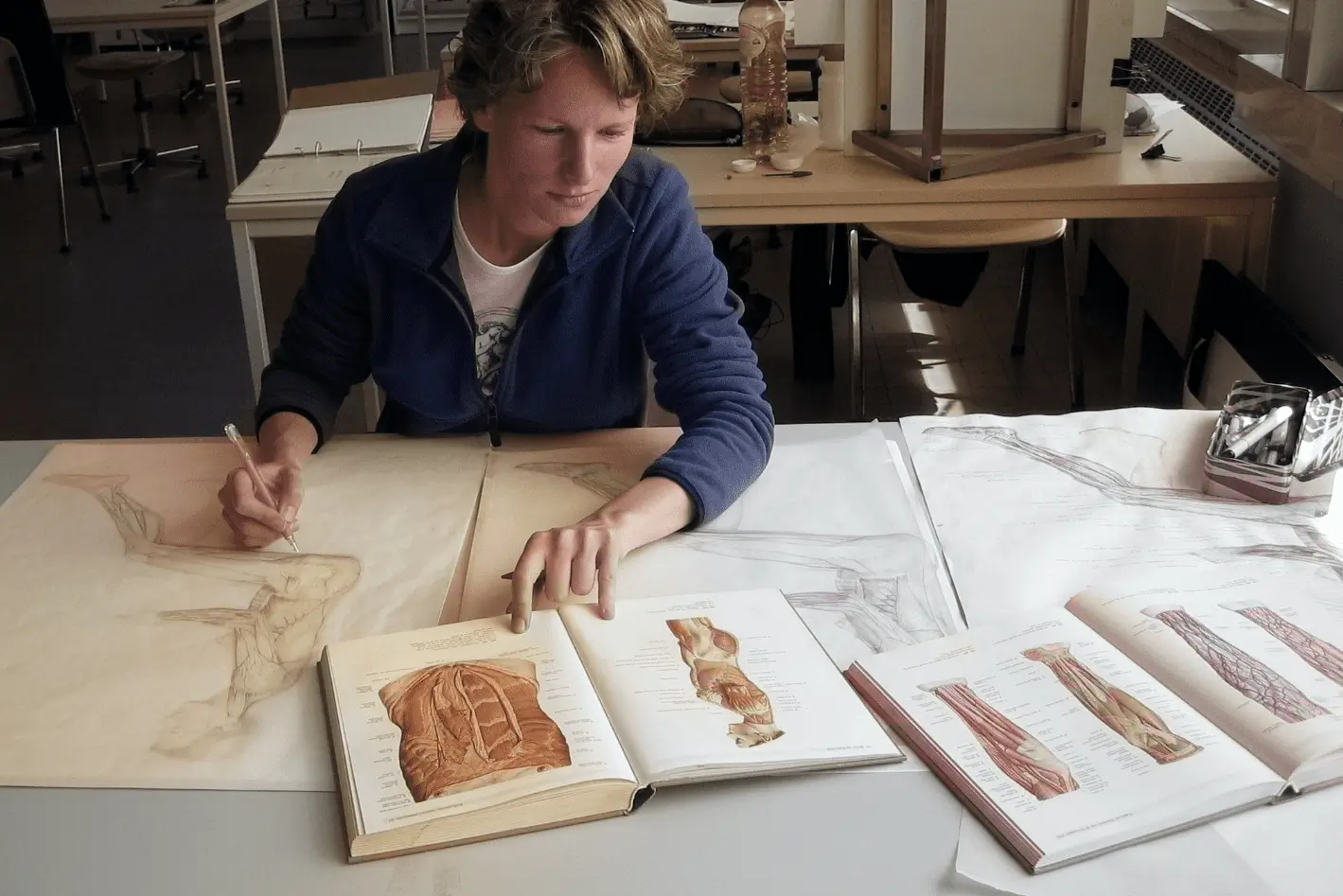
As a medical illustrator, I also create concise animations that make complex scientific concepts easier to understand. With my background in anatomy and visual storytelling, I combine accuracy and creativity, turning complex processes into clear, engaging motion.
Where medical animation adds real value
Medical animation is particularly valuable when processes unfold over time or when spatial relationships are difficult to understand in static form.
Surgical procedures and clinical workflows
Animation allows for controlled, step-by-step visualization of procedures without the visual noise of live footage. Blood, obstruction, and unnecessary detail can be removed, while critical structures remain clearly visible.
This supports:
- surgical training
- preoperative planning
- multidisciplinary communication
Related: → surgical illustration
Patient education and communication
For patients, medical information can be overwhelming, especially in stressful situations. Animation helps translate complex explanations into clear, structured narratives.
Instead of long verbal explanations, patients can see:
- what is happening in their body
- how a treatment works
- what to expect during a procedure
This reduces anxiety and improves understanding.
Related: → patient education illustration
Education, research, and e-learning
In medical and scientific education, many processes cannot be observed directly. Animation makes these processes accessible and understandable.
Applications include:
- medical and nursing education
- specialist training
- e-learning platforms
- academic presentations
When combined with accurate illustration, animation significantly improves knowledge retention and comprehension.
Healthcare communication and innovation
Hospitals, research institutions, and healthcare companies use medical animation to clearly and professionally communicate complex ideas.
Externally, it helps position expertise and explain innovation. Internally, it supports training, alignment, and decision-making.
Related: →medical illustration services
Medical animation versus medical illustration
While closely related, medical animation and medical illustration serve different roles.
Medical illustration offers:
- maximum control over detail and composition
- precise anatomical accuracy
- clarity in static communication
Medical animation adds:
- movement and sequence
- cause-and-effect relationships
- temporal understanding
In professional practice, animation rarely replaces illustration. It builds on it.
This is why most high-quality animation projects start with a strong illustration phase, defining structure, hierarchy, and accuracy before motion is introduced.

The production process
Every medical animation project follows a structured, collaborative workflow.
It starts with defining the objective, audience, and level of detail. Based on this, I develop visual concepts and, where needed, detailed medical illustrations that serve as the foundation for the animation.
From there, the project moves into storyboard development and 3D production. Throughout the process, review moments are integrated to ensure scientific accuracy and alignment with your goals.
This structured approach ensures:
- clarity from the start
- controlled development
- predictable timelines
- accurate final results
How to plan a story
What is a storyboard?
A storyboard may help you see your project’s appearance before it starts. Artists draw out the steps of an undertaking – from start to finish – onto paper, which later becomes invaluable during production.
Whether you need an animated medical illustration for a presentation, an e-learning module, or patient education, I tailor the visuals to your audience and objectives.

How much does medical animation cost?
Medical animation is always custom work. Costs depend on the scope and complexity of the project.
Key factors include:
- length of the animation
- complexity of the subject
- level of realism
- intended usage and licensing
High-quality medical animation is a custom service. Costs vary depending on complexity, duration, and production requirements.
As a general indication, projects typically range from several thousand euros for short animations to significantly higher budgets for complex productions.
This includes research, concept development, illustration groundwork, 3D production, animation, and post-production.
Because animations are reusable across multiple platforms, they often function as long-term assets with a strong return on investment.
Understanding medical illustration pricing
Every project is custom and depends on scope, complexity, and intended usage. If you would like a clear overview of how pricing is structured, including typical ranges and licensing, you can explore the pricing page.
Why professional medical animation matters
In a market filled with stock visuals and AI-generated content, quality varies widely. For professional healthcare and scientific use, accuracy is non-negotiable.
Generic solutions often lack:
- anatomical correctness
- proper medical terminology
- contextual understanding
AI-generated visuals in particular can introduce subtle but critical errors, especially in complex anatomical or physiological processes.
Professional medical animation ensures:
- scientific accuracy
- visual clarity
- consistency across outputs
- clear licensing and usage rights
This is essential for organizations that rely on precision, credibility, and trust.

3D medical animation: understanding the body in space and time
Three-dimensional animation enables a more in-depth understanding of spatial relationships and dynamic processes.
It makes it possible to:
- move through anatomical structures
- isolate layers of tissue
- zoom from organ level to cellular detail
- show processes unfolding over time
This is particularly valuable for:
- complex surgical procedures
- device placement
- treatment pathways
- physiological changes
By translating raw medical data into structured visuals, 3D animation bridges the gap between complexity and understanding.
Who creates accurate medical animations?
Accurate medical animation requires more than technical 3D skills. It demands a deep understanding of anatomy, physiology, and clinical context.
As a medical illustrator with a Master’s degree in Scientific Illustration and specialized 3D training, I combine scientific knowledge with visual expertise. This ensures that every animation is not only visually strong but also medically correct.
You collaborate directly with the person responsible for both the scientific content and the visual execution, ensuring clarity, efficiency, and consistency throughout the project.
Frequently asked questions
Find answers to common questions about the illustration process, timelines, pricing, licensing, file delivery, and collaboration.
Discuss your project
If you are working on a medical, scientific, or healthcare-related project and need clear, accurate visual communication, I can help you determine whether animation is the right solution or how it can best complement illustration.
Together, we define the most effective visual approach for your specific goals.