Mechanism of Action (MoA) visualization
Clear visuals that explain complex drug mechanisms at the molecular and cellular level, translating scientific processes into structured, understandable communication.
Molecular and cellular-level accuracy
Illustrations based on verified scientific sources, ensuring precise representation of biological pathways, interactions, and pharmacological processes.
High-stakes scientific communication
Designed for research, regulatory, and investor contexts, where clarity, accuracy, and credibility are essential for decision-making and communication.
Pharmaceutical medical illustration services
In pharmaceutical development, accuracy is non-negotiable. When working on a new drug, advanced therapy, or complex biotechnological process, the way scientific data is communicated can directly influence understanding, trust, and decision-making. A breakthrough that cannot be clearly explained risks being misunderstood, overlooked, or misinterpreted.
Pharmaceutical medical illustration provides clarity where text, raw data, or photography falls short. Through scientifically precise and carefully designed visuals, complex mechanisms become understandable without compromising accuracy or regulatory integrity.
I am Karin Spijker, a certified medical and scientific illustrator working with pharmaceutical companies, biotech organizations, and life sciences teams worldwide. I specialize in translating complex pharmacological and biological processes into visual narratives that support research, education, marketing, and regulatory communication.
See also → scientific illustration
“I have worked with Karin Spijker for many years on various visual projects. The greatest common denominator in these projects is a qualitative, professional image delivered on time. Karin is entirely at home in both fields, whether an illustration or high-end image editing on photo material.”
 Pauline Speelman, Signorita
“Karin Spijker has performed assignments for me several times to my complete satisfaction, such as logos and two 3D animations. Karin can translate the information from a briefing into the desired end product and can think along with you pleasantly. In doing so, she works accurately, follows the set timetable, and honors her appointments. Karin is also a charming person to work with.”
 Natasja Kardos, Seahorse Solutions
“For my clients, I have asked Karin Spijker more often for customized assignments, especially for more specialized image editing. Karin can conjure up software like Adobe Photoshop and Illustrator. She is very meticulous and also communicates about progress. I highly recommend Karin, her work, and her pleasant cooperation.”
 Marian de Jong, Piri Piri Marketing en Communicatie
What pharmaceutical medical illustration really means
Pharmaceutical medical illustration is a specialized discipline within scientific visualization, focused on the interaction between therapeutic agents and biological systems. Unlike general medical illustration, which often centers on anatomy or clinical procedures, pharmaceutical medical illustrations address questions such as:
- How does a compound interact at the molecular or cellular level?
- What differentiates this therapy from existing treatments?
- How can complex pharmacodynamics be explained clearly to different stakeholders?
These illustrations visualize mechanisms, not appearances. They are designed to communicate function, sequence, and impact, whether the audience consists of physicians, regulatory reviewers, investors, or patients.
The objective is always the same: scientific correctness combined with visual clarity, adapted to the viewer’s knowledge level and context.
Why do pharmaceutical companies require specialized expertise
In pharmaceutical communication, visuals carry responsibility. An inaccurate illustration can lead to misunderstanding, reputational damage, or regulatory complications. For that reason, pharmaceutical medical illustrations require more than strong visual skills; they demand scientific literacy and critical interpretation.
As a certified medical illustrator, I work directly from scientific sources, including peer-reviewed publications, molecular data, and internal documentation. I’m familiar with key pharmaceutical and biological concepts, which allows me to collaborate efficiently with R&D teams, medical affairs, and regulatory specialists.
Rather than simply executing a brief, I function as a visual partner who understands both the scientific content and its communicative purpose.
About Karin Spijker
I am Karin Spijker, a scientific and medical illustrator with a background in drawing, painting, and textile design. With a master’s in scientific illustration and additional skills in 3D production, I combine accuracy, artistry, and storytelling. My work helps healthcare and publishing teams communicate complex ideas clearly and reliably.
Alongside commissioned projects, I also create independent artworks inspired by nature, anatomy, and landscapes. My mission is to make science and nature accessible, inspiring, and visually engaging.

Applications across the pharmaceutical lifecycle
Pharmaceutical illustrations add value at multiple stages of development and communication:
Research and development
Early-stage visuals help teams align internally, clarify hypotheses, and communicate complex concepts across disciplines.
Investor and stakeholder communication
For biotech startups and pharmaceutical innovators, clear MoA visuals in pitch decks and presentations can be decisive in funding and strategic partnerships.
Medical affairs and professional education
Healthcare professionals require concise, accurate information. A well-designed illustration can convey key differences and benefits more effectively than extensive text.
Marketing and launch communication
At conferences, in publications, and across digital platforms, premium custom visuals communicate professionalism, credibility, and innovation.
Patient education
Patient-facing illustrations require a calm, accessible visual language that remains medically accurate, supporting understanding, adherence, and informed consent.
Mechanism of Action (MoA):
where precision matters most
Mechanism of Action visualization is one of the most critical applications within pharmaceutical illustration. It explains how a therapy works, step by step, from administration to biological effect.
Effective MoA illustrations go beyond simplified metaphors. They reflect:
- molecular interactions
- cellular environments
- downstream biological effects
- therapeutic specificity
Using layered 2D illustrations or 3D visualization, I create MoA imagery that is scientifically robust yet visually approachable. These visuals often become central assets in launch strategies, educational materials, and investor communications.
More about → biomedical illustration
Collaboration, validation, and workflow
Pharmaceutical illustration requires a structured and transparent process to ensure accuracy and efficiency.
Briefing and scientific context
We begin by defining objectives, audiences, and usage. You provide relevant materials such as publications, internal data, or molecular references. I conduct additional research where needed.
Concept development
Initial sketches establish composition, narrative focus, and scientific structure. This stage is essential for confirming correctness before further refinement.
Scientific review and validation
Illustrations are reviewed in collaboration with your medical or scientific experts to ensure full accuracy.
Final development
Once approved, the illustration is rendered in the agreed visual style, schematic, vector-based, or photorealistic, with careful attention to clarity and consistency.
Delivery
Final files are delivered in formats optimized for print, digital platforms, presentations, or large-scale exhibition use.
A transparent workflow designed for accuracy, clarity, and efficient collaboration.

Why custom illustration outperforms AI and stock imagery
While AI-generated visuals and stock images may seem efficient, they pose significant risks in pharmaceutical contexts.
AI limitations
AI systems do not understand biology; they generate images based on visual probability, often introducing subtle but critical scientific errors. Copyright and ownership remain legally uncertain.
Stock limitations
Stock imagery is generic, non-exclusive, and rarely specific enough for novel therapies. Competitors may use identical visuals, undermining differentiation.
Custom pharmaceutical medical illustration offers:
- verified scientific accuracy
- exclusive, brand-specific visuals
- controlled messaging and focus
- clear licensing and long-term usability
|
Feature
|
Custom Medical Illustrations (Karin Spijker)
|
Stock Images / AI Tools
|
|---|---|---|
|
Scientific accuracy
|
100% verified and based on professional expertise
|
Often generic, outdated, or factually incorrect
|
|
Uniqueness
|
100% verified and based on professional expertise
|
Often generic, outdated, or factually incorrect
|
|
Didactic focus
|
Specifically designed to explain your message
|
General imagery, often lacking instructional focus
|
|
Flexibility
|
Fully adaptable throughout the design process
|
No or very limited customization
|
|
Visual consistency
|
A consistent visual language across materials
|
Mixed styles from multiple sources
|
In regulated and high-stakes environments, these advantages are essential.
Selected pharmaceutical illustration work
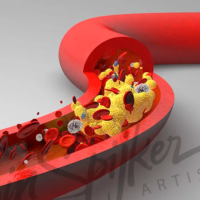
A selection of pharmaceutical medical illustrations created for scientific publications, education, and healthcare communication.



Budget, value, and return on investment
Pharmaceutical illustration represents an investment in clarity, credibility, and risk mitigation. Costs depend on complexity, technique, and licensing scope, for example, whether an illustration is used internally or as part of a global campaign.
Working directly with a specialized illustrator ensures that budgets are spent on expertise and execution rather than agency overhead. Because high-quality illustrations can be reused across multiple channels and over extended periods, their long-term value is substantial.
The future of pharmaceutical visualization
Pharmaceutical communication continues to evolve. While static illustrations remain essential for publications and regulatory contexts, interactive visuals and animation are increasingly used to explain dynamic processes.
At the same time, patient-centric communication is gaining importance. Clear visuals empower patients, improve understanding, and support adherence, adding real societal value to pharmaceutical innovation.
With experience in both static and animated visualization, I adapt alongside these developments while maintaining scientific rigor.
Frequently asked questions
Find answers to common questions about the illustration process, timelines, pricing, licensing, file delivery, and collaboration.
Why work with Karin Spijker?
I combine biomedical expertise, visual precision, and reliability. I understand the science behind your therapy and translate it into visuals that are calm, accurate, and professional.
Clients value my ability to work independently, communicate efficiently with scientific teams, and deliver visuals that stand up to academic, commercial, and regulatory scrutiny.
Pharmaceutical medical illustration plays a critical role in modern pharmaceutical communication. It transforms complexity into understanding and innovation into clarity.
If your project requires scientifically accurate visuals that support high-level decision-making, I invite you to get in touch. Together, we can translate your pharmaceutical science into visual communication that informs, convinces, and endures.
Translate complex pharmaceutical medical content into precise visual communication
Work with a specialized pharmaceutical medical illustrator for accurate, publication-ready visuals tailored to your field.
Ready to collaborate on a pharmaceutical medical illustration project?
Clear, accurate, and aligned with your medical content