Objective medical visualization
Neutral, evidence-based illustrations designed to clarify complex medical information in legal and insurance contexts.
Clarity for non-medical audiences
Structured visual explanations that improve understanding for lawyers, insurers, judges, and juries.
Confidential and structured workflow
Projects handled with attention to accuracy, privacy, documentation, and professional communication.
Medico-legal illustration services
Medico-legal illustration translates complex medical evidence into clear, objective visuals that support decision-making in legal, forensic, and insurance contexts.
As a legal professional, forensic expert, or medical advisor, you often work with highly detailed and technical medical data. Communicating this effectively to judges, juries, or non-medical stakeholders is a challenge. Medical terminology, imaging, and reports can be difficult to interpret without specialized knowledge.
This is where medico-legal illustration becomes essential. It provides a scientifically accurate, case-specific visual representation of medical facts designed specifically for clarity, neutrality, and legal usability.
At Karin Spijker, I specialize in translating complex anatomical and pathological information into precise visual communication. My work bridges the gap between medical science and legal practice, ensuring that the medical reality is understood exactly as intended.
See also:
→ surgical illustration
→ anatomy illustration
→ medical illustration
The role of visual evidence in legal decision-making
Visual communication plays a critical role in how information is processed in court. Research in cognitive science and legal communication consistently shows that visual information is retained more effectively than text or spoken explanations alone.
In legal proceedings, where large volumes of testimony and documentation must be reviewed, medical legal graphics for court help to:
- clarify complex anatomical structures and injuries
- reduce misinterpretation of medical data
- maintain focus during presentations and testimony
- support expert explanations with factual visual reference
A medico-legal illustration does not replace medical testimony; it strengthens it. It provides a stable, objective visual anchor that ensures all parties view the same information.
Medico-legal illustration as a communication tool
A well-developed medico-legal illustration is not decorative. It is a communication tool designed to improve understanding of complex medical information in situations where clarity matters.
Whether used in insurance communication, legal documentation, or medical clarification, the objective remains the same: translating medical complexity into visuals that are accurate, neutral, and understandable.
If you are looking for medico-legal illustration services focused on clarity, structure, and professional communication, I would be happy to discuss your project.
The role of visual communication in legal and insurance contexts
Medical information is often highly technical. Imaging data, surgical descriptions, anatomical terminology, and treatment histories can become difficult to interpret outside specialist medical environments.
Medico-legal illustrations help organize and clarify this information visually by:
- simplifying complex anatomical relationships
- clarifying injury location and progression
- supporting communication between medical and legal professionals
- improving understanding for non-medical audiences
- presenting information in a structured and objective format
A well-developed illustration does not replace medical evidence. It supports communication around that evidence by making complex information easier to understand.
“I have worked with Karin Spijker for many years on various visual projects. The greatest common denominator in these projects is a qualitative, professional image delivered on time. Karin is entirely at home in both fields, whether an illustration or high-end image editing on photo material.”
 Pauline Speelman, Signorita
“Karin Spijker has performed assignments for me several times to my complete satisfaction, such as logos and two 3D animations. Karin can translate the information from a briefing into the desired end product and can think along with you pleasantly. In doing so, she works accurately, follows the set timetable, and honors her appointments. Karin is also a charming person to work with.”
 Natasja Kardos, Seahorse Solutions
“For my clients, I have asked Karin Spijker more often for customized assignments, especially for more specialized image editing. Karin can conjure up software like Adobe Photoshop and Illustrator. She is very meticulous and also communicates about progress. I highly recommend Karin, her work, and her pleasant cooperation.”
 Marian de Jong, Piri Piri Marketing en Communicatie
Examples of medico-legal illustration applications
Medico-legal illustrations can support communication in cases involving:
- traumatic injury clarification
- fracture and orthopedic visualization
- surgical complication explanation
- insurance and disability claims
- anatomical communication for legal contexts
- medical explanation for non-medical audiences
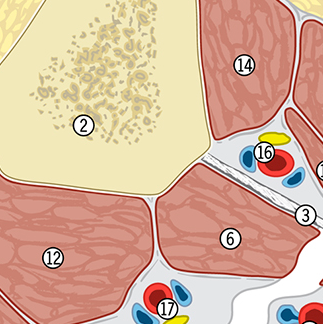
For example, complex fracture patterns, surgical sequences, or nerve compression may be translated into structured visual explanations that improve understanding for lawyers, insurers, judges, or juries without requiring advanced medical knowledge.
Why illustration can improve understanding more effectively than photography
Medical photography and diagnostic imaging remain important sources of information, but they are not always ideal communication tools in legal or insurance settings. Raw imaging and photography often contain visual complexity that can overwhelm non-medical viewers.
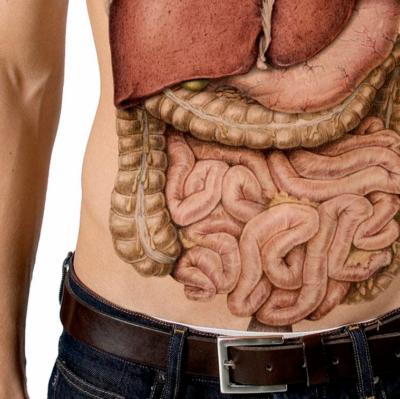
Illustration allows information to be selectively organized and clarified.
This may include:
- isolating relevant anatomical structures
- removing unnecessary visual distraction
- combining multiple viewpoints into one coherent image
- highlighting relationships between anatomy, treatment, and injury
- presenting medical information in a more accessible visual format
This level of visual control is particularly valuable when communication clarity is essential.
Objective visualization and scientific accuracy
Objectivity is essential in medico-legal illustration. The role of the illustration is not to exaggerate or dramatize medical findings, but to communicate them as clearly and accurately as possible.
Each illustration is developed using:
- medical reference material
- anatomical knowledge and structural accuracy
- case-specific source information
- professional visual hierarchy and clarification
When appropriate, visuals can also be reviewed alongside medical professionals to ensure that the illustration accurately reflects the intended anatomical or clinical information.
The goal is clear communication grounded in medical understanding and professional neutrality.
A structured and confidential workflow
Medico-legal projects often involve sensitive information and require a careful, professional workflow. Clear communication, privacy, and structured collaboration are central throughout the process.
The workflow typically includes:
- confidential project briefing
- review of medical source material
- concept development and sketch phase
- refinement and feedback
- final delivery for presentation or documentation purposes
Projects are handled with attention to privacy, accuracy, and efficient communication from start to finish.
A transparent workflow designed for accuracy, clarity, and efficient collaboration.

About Karin Spijker
I am Karin Spijker, a scientific and medical illustrator with a background in drawing, painting, and textile design. With a master’s in scientific illustration and additional skills in 3D production, I combine accuracy, artistry, and storytelling. My work helps healthcare and publishing teams communicate complex ideas clearly and reliably.
My work focuses on translating complex medical information into structured visual communication that supports clarity, accuracy, and understanding across professional contexts.
Alongside commissioned projects, I also create independent artworks inspired by nature, anatomy, and landscapes. My mission is to make science and nature accessible, inspiring, and visually engaging.

Case-specific medical visualization
Every medico-legal project is different. Some cases focus on traumatic injury, while others involve surgical procedures, chronic conditions, treatment timelines, or anatomical clarification related to insurance or liability discussions.
Case-specific medical illustrations may support:
- injury and trauma clarification
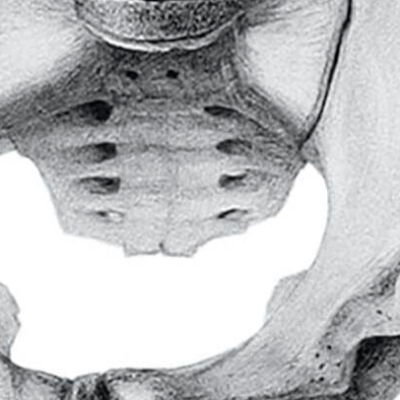
- orthopedic and anatomical explanation
- surgical sequence visualization
- treatment and recovery timelines
- insurance and disability communication
- communication for legal documentation or presentation
These visuals are developed from available medical references such as imaging, clinical notes, operative reports, and anatomical source material. The purpose is always to create a structured and understandable visual explanation based on the information provided.
Working with a specialist vs. generic solutions
Choosing a specialized medical illustrator significantly reduces the risk of misinterpretation and increases the reliability of visual evidence.
|
Aspect
|
Karin Spijker
|
Generic illustration / stock
|
|---|---|---|
|
Medical expertise
|
Advanced biomedical knowledge
|
Limited or general knowledge
|
|
Case specificity
|
Fully tailored to the case
|
Generic and reusable visuals
|
|
Validation
|
Developed using medical source material and anatomical reference |
Rarely validated
|
| Visual clarity | Structured, neutral, precise |
No or very limited customization
|
|
Data security
|
GDPR-compliant workflows
|
Varies, often unclear
|



Understanding medico-legal illustration pricing
Every project is custom and depends on scope, complexity, and intended usage. If you would like a clear overview of how pricing is structured, including typical ranges and licensing, you can explore the pricing page.
Privacy, data security, and professional standards
Handling medical data requires strict compliance with privacy regulations. All projects are managed in accordance with GDPR-compliant protocols, including secure file transfer and data handling.
I work according to international standards in medical illustration and continuously update my knowledge through professional development and collaboration within the field.
If required, I can provide documentation on methodology, sources, and workflow to support the formal use of illustrations in legal proceedings.
Related medical illustration services
Medico-legal illustration often overlaps with other specialized areas. Depending on your case, you may also find relevant:
- medical illustration
- surgical illustration
- human anatomy illustration
- patient education illustration
These pages provide additional context on how complex medical information can be visualized across different applications.
Frequently asked questions
Find answers to common questions about the illustration process, timelines, pricing, licensing, file delivery, and collaboration.
Request a confidential consultation
If you are working on a legal, forensic, or insurance case and need clear, objective medical visualization, I can provide accurate, case-specific illustrations.
During a confidential consultation, we will review your case, define the required level of detail, and determine the most effective visual approach.
A well-constructed medico-legal illustration does more than explain; it ensures that complex medical facts are understood correctly.
Clarifying complex medical information through objective visual communication
Work directly with a specialized medical illustrator
for accurate, publication-ready visuals tailored to your field.
Ready to collaborate on a medical illustration project?
Clear, accurate, and aligned with your medical content